
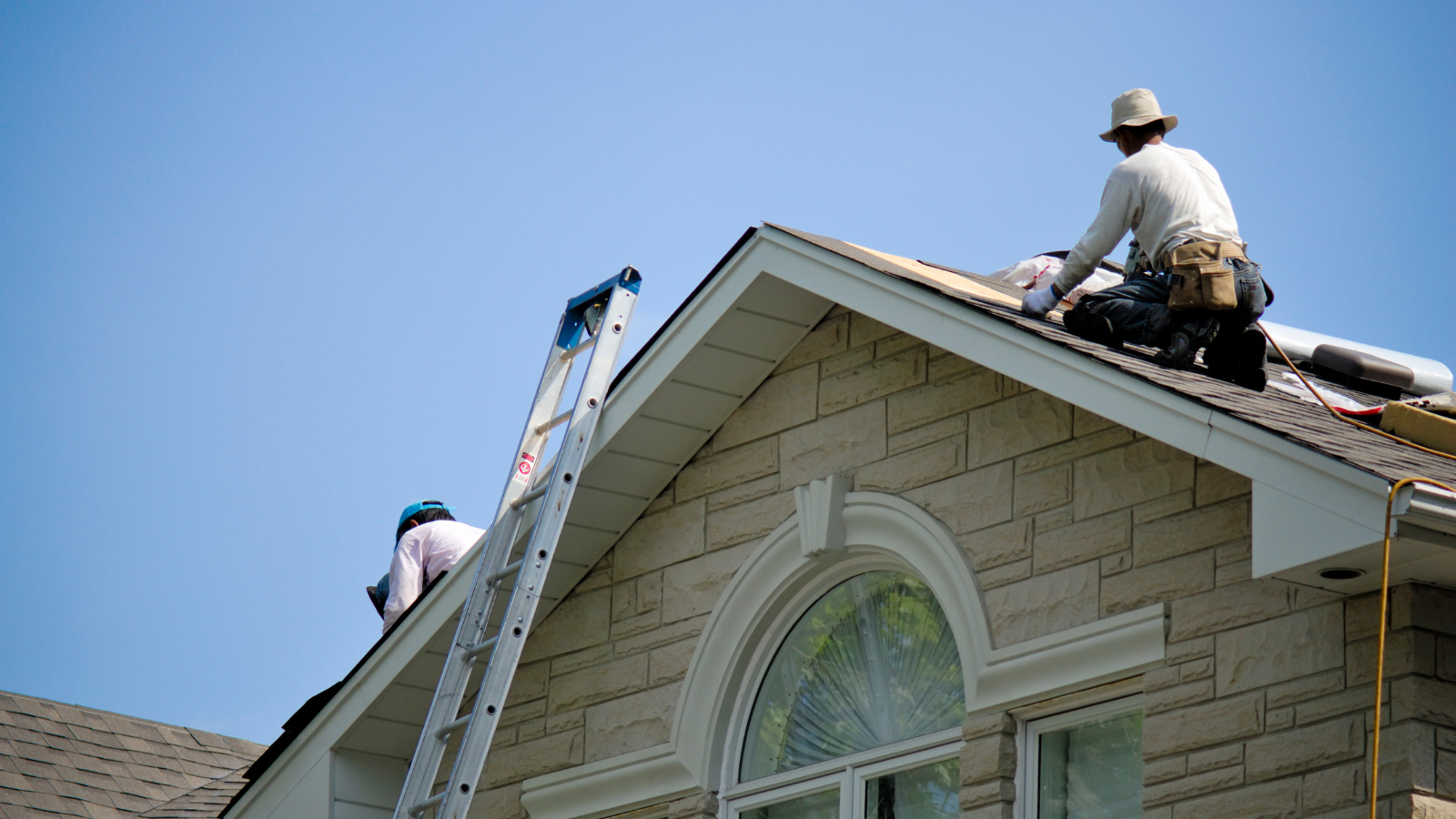
When a roof problem appears, many homeowners face the same question: Should I try to fix it myself or call a professional roofing contractor?
A loose shingle, clogged gutter, or small ceiling stain may initially seem manageable. Online tutorials can make roofing work appear straightforward, and doing the work yourself may seem like an opportunity to save money. The reality is that roof problems can be more complicated than they appear from the ground.
A missing shingle may be the visible result of a larger wind damage problem. A ceiling stain may originate several feet away from the actual leak. Loose flashing may indicate deterioration beneath surrounding roofing materials. Even a seemingly simple repair can create additional problems when the underlying cause is not identified correctly.
Understanding the differences between DIY professional roof repairs can help Elkhart homeowners decide which tasks they can reasonably handle and when professional roofing services are the safer and more practical choice.
At Elkhart County Roofing, we serve homeowners throughout Elkhart, Bristol, Goshen, Granger, Howe, La Porte, LaGrange, Ligonier, Michigan City, Middlebury, Mishawaka, Nappanee, Shipshewana, South Bend, Wakarusa, Fort Wayne, Edwardsburg, Kalamazoo, Niles, and Rochester.
Why Homeowners Consider DIY Roof Repairs
There are understandable reasons homeowners consider repairing their own roofs.
Common motivations include:
- Saving money
- Avoiding scheduling delays
- Fixing a small problem quickly
- Enjoying home improvement projects
- Believing the repair is simple
- Having previous construction experience
For minor property maintenance, a do it yourself approach can sometimes make sense.
The challenge is determining whether a roofing problem is actually minor.
Roofs are interconnected systems containing shingles or other surface materials, underlayment, flashing, decking, ventilation, gutters, fasteners, and numerous penetrations.
A problem with one component can affect several others.
This complexity is one of the biggest differences homeowners should consider when comparing DIY professional roof repairs.
Roofing Work Comes With Serious Safety Risks
Safety should be the first consideration before attempting any roofing work.
Roof surfaces may be:
- Steep
- Slippery
- Hot
- Wet
- Icy
- Unstable
- Covered with loose granules
A roof that appears easy to walk on from the ground may feel completely different once you are standing on it.
Ladders introduce additional risks.
Uneven ground, incorrect ladder positioning, damaged equipment, or reaching too far can lead to falls.
Professional roofers use training, appropriate equipment, footwear, and safety procedures designed for working at height.
For homeowners without roofing experience, avoiding unnecessary roof access is often the safest decision.
Roof Damage Is Not Always What It Appears to Be
One of the biggest challenges with DIY roofing is diagnosis.
Suppose you notice water dripping from a ceiling.
It may seem logical to inspect the roof directly above that location.
However, water can enter through one area and travel along:
- Roof decking
- Rafters
- Trusses
- Insulation
- Pipes
before becoming visible inside the home.
The actual leak may be several feet away from the ceiling stain.
Replacing one shingle above the stain may therefore accomplish nothing.
Professional roofers are trained to evaluate the roofing system and trace potential sources of moisture.
DIY Roof Repair May Address the Symptom Instead of the Cause
A temporary improvement does not necessarily mean the roofing problem has been corrected.
For example, a homeowner may apply roofing sealant around an area that appears to be leaking.
The visible leak may stop temporarily, but the actual problem could involve damaged flashing beneath surrounding materials.
If moisture continues entering elsewhere, hidden deterioration may continue.
When evaluating DIY professional roof repairs, consider whether you can accurately identify the cause rather than simply the most obvious symptom.
When Homeowners Can Safely Perform Basic Maintenance
Not every roofing related task requires climbing onto the roof.
Homeowners can perform several useful checks from the ground.
These may include:
- Looking for missing shingles
- Checking for roof debris after storms
- Monitoring gutters
- Checking downspout discharge
- Looking for damaged siding
- Monitoring ceiling stains
- Checking accessible attic areas
- Photographing visible storm damage
Ground level observation can help you recognize when professional inspection may be needed.
Homeowners can also maintain landscaping around the property and arrange professional trimming of branches that threaten the roof.
Gutter Maintenance and DIY Work
Gutter maintenance can help protect the roofing system by keeping rainwater moving away from the roof edge.
Some homeowners clean accessible gutters themselves.
However, ladder safety remains important.
If gutters are located high above the ground, difficult to reach, or near electrical hazards, professional assistance may be more appropriate.
Gutters that are sagging, pulling away, leaking at seams, or attached to deteriorated fascia may require more than cleaning.
These problems can involve exterior construction knowledge and proper drainage alignment.
Missing Shingles May Look Like an Easy Repair
A missing shingle is one of the most visible roofing problems.
Homeowners may assume they can simply purchase a replacement and install it.
The situation may be more complicated.
A missing shingle can indicate:
- Wind damage
- Failed fasteners
- Aging materials
- Installation problems
- Broken adhesive seals
- Damage to neighboring shingles
Replacing only the missing piece without inspecting surrounding materials may leave additional vulnerabilities.
Professional roofers can evaluate whether the damage is truly isolated.
Why Shingle Matching Matters
Even when only a small number of shingles require replacement, matching existing materials can be challenging.
Roofing products vary by:
- Manufacturer
- Product line
- Color
- Profile
- Age
Older shingles may also fade or weather differently from new materials.
A professional contractor can help identify suitable repair materials and determine whether the existing roofing system can be repaired effectively.
Flashing Repairs Are More Complex Than They Look
Flashing protects some of the most vulnerable areas of a roof.
It may be installed around:
- Chimneys
- Skylights
- Roof valleys
- Plumbing vents
- Sidewalls
- Dormers
Incorrect flashing work can create water entry points rather than eliminate them.
Simply covering damaged flashing with sealant may not provide a reliable repair.
When comparing DIY professional roof repairs, flashing is one area where professional knowledge can make a significant difference.
Chimney Leaks Require Careful Diagnosis
Water near a chimney does not automatically mean the roof itself is leaking.
Possible causes include:
- Step flashing problems
- Counter flashing problems
- Damaged masonry
- Cracked mortar
- Deteriorated sealants
- Chimney cap issues
Accurate diagnosis matters because repairing the wrong component wastes time and may allow moisture to continue entering the home.
A roofing contractor can evaluate roof related components and determine whether another professional may also be needed.
Roof Valley Repairs
Roof valleys collect runoff from multiple roof slopes.
Because large amounts of water move through these areas, installation details are especially important.
Problems may involve:
- Damaged shingles
- Flashing
- Underlayment
- Debris
- Improper previous installation
Valley repairs may require removing surrounding roofing materials to address the underlying problem properly.
This is not usually an ideal area for inexperienced DIY work.
Pipe Boot Repairs
Plumbing pipes commonly extend through residential roofs.
Pipe boots or flashing systems help prevent water from entering around these penetrations.
Rubber components can crack or deteriorate with age.
Although the visible problem may look simple, incorrect repair can create additional water entry points.
Professional evaluation can determine whether the boot, flashing, surrounding shingles, or other materials require attention.
Roof Sealant Is Not a Universal Solution
Roofing sealants have appropriate applications, but they should not be treated as a solution for every leak.
Applying sealant over a problem can sometimes:
- Hide damage
- Trap moisture
- Make later repairs more difficult
- Fail to address underlying deterioration
A roof is designed to shed water through overlapping materials and carefully constructed transitions.
Repair methods should maintain that design rather than depend entirely on surface sealant.
DIY Repairs Can Affect Existing Roofing Materials
Walking on roofing materials incorrectly can cause damage.
Asphalt shingles may be more vulnerable during very hot or cold conditions.
Foot traffic can potentially:
- Scuff granules
- Crack brittle shingles
- Damage edges
- Disturb loose materials
Metal roofing can also be slippery and may require specific walking techniques depending on the system.
Professional roofers understand how to move around roofing surfaces while reducing unnecessary damage.
Warranty Considerations
Before attempting roof repairs, homeowners should review applicable roofing warranties.
Some warranties contain requirements related to installation, repairs, maintenance, or approved materials.
Improper work could potentially affect warranty coverage depending on the specific terms.
Because warranties vary, homeowners should review their documentation rather than assume a DIY repair will or will not affect coverage.
Warranty considerations are another factor when comparing DIY professional roof repairs.
The Hidden Cost of an Incorrect Repair
DIY roofing is often considered primarily as a way to save money.
However, an incorrect repair can become more expensive later.
Suppose a homeowner spends money repairing what appears to be a small leak.
If the repair does not address the actual source, water may continue affecting:
- Decking
- Insulation
- Drywall
- Framing
- Interior finishes
By the time the continuing leak is discovered, more materials may require repair.
The true cost of a roofing project therefore includes both the initial expense and the risk of unresolved damage.
Professional Roofers Bring Diagnostic Experience
One of the major advantages of professional roofing services is experience identifying patterns.
Roofers regularly encounter problems such as:
- Wind damaged shingles
- Hail impacts
- Failed flashing
- Deteriorated pipe boots
- Valley leaks
- Ventilation problems
- Decking deterioration
- Gutter related moisture
This experience can make it easier to distinguish between the visible symptom and the underlying cause.
That diagnostic ability is an important consideration when evaluating DIY professional roof repairs for your Elkhart area home.
Professional Contractors Have Appropriate Equipment
Roof repair may require more than a ladder and hammer.
Depending on the project, professional contractors may use specialized:
- Safety equipment
- Roofing tools
- Fasteners
- Materials
- Inspection equipment
Having the correct tools helps contractors complete repairs according to appropriate roofing practices.
Homeowners purchasing equipment for a single repair may also discover that DIY work costs more than expected.
Professional Repairs Can Address Surrounding Damage
Roof problems rarely exist in complete isolation.
A missing shingle may have exposed underlayment.
A flashing leak may have affected decking.
A damaged roof edge may also involve fascia or gutters.
Professional inspection can evaluate surrounding materials rather than replacing only the most obvious damaged component.
This broader approach can help reduce the likelihood of leaving hidden problems behind.
DIY Storm Damage Repairs Can Be Particularly Risky
After severe weather, homeowners naturally want to protect their homes quickly.
However, storm damaged roofs may be more dangerous than normal.
Possible hazards include:
- Loose shingles
- Wet surfaces
- Fallen branches
- Hidden structural damage
- Unstable decking
- Electrical hazards
Do not climb onto a roof immediately after a major storm.
Inspect what you safely can from the ground and contact professionals when damage is suspected.
Temporary Emergency Measures Are Different From Permanent Repairs
In some situations, temporary measures may be needed to reduce interior water damage while professional repairs are arranged.
Temporary protection should not be confused with a permanent roofing repair.
If water is entering the home, prioritize personal safety and protect interior belongings when it is safe to do so.
A roofing professional can then determine the appropriate permanent solution.
Hail Damage Is Difficult to Evaluate Without Experience
Hail damage may not look like obvious holes.
Depending on the roofing material and storm, hail can cause:
- Granule loss
- Bruising
- Cracking
- Surface damage
- Damage to flashing or vents
Some normal aging conditions can also resemble storm damage.
Professional evaluation can help distinguish between different types of deterioration.
When comparing DIY professional roof repairs after hail, accurate diagnosis becomes particularly important.
Wind Damage Can Be Hidden
Wind does not need to remove a shingle completely to damage it.
Strong winds can lift shingles and break their seals.
The materials may then settle back into place.
From the ground, everything can look normal.
A professional inspection may identify creases, broken seals, loose materials, or other wind related problems that a homeowner might miss.
Northern Indiana Weather Adds Complexity
Homes throughout Elkhart and surrounding areas face changing weather throughout the year.
Roofing systems may experience:
- Snow
- Ice
- Freezing temperatures
- Heavy rain
- Strong wind
- Hail
- Summer heat
- Humidity
- Freeze and thaw cycles
These conditions can affect shingles, flashing, gutters, sealants, ventilation, and other components.
Local roofing experience is valuable because the same repair technique may not be appropriate for every roofing material or condition.
Winter DIY Roofing Can Be Especially Dangerous
Snow and ice make roof surfaces extremely slippery.
Cold temperatures may also make certain roofing materials more brittle.
Homeowners should avoid climbing onto snow covered or icy roofs.
Even seemingly simple tasks such as removing snow or checking gutters can become hazardous in winter conditions.
Professional assistance is the safer choice when work requires roof access during difficult weather.
What About Roof Leak Repairs From Inside the Attic?
Homeowners sometimes attempt to stop leaks from inside the attic.
While the attic can provide useful clues about where water is traveling, interior patching does not necessarily correct the exterior entry point.
Water should ideally be stopped at the roofing surface before it enters the building envelope.
An interior patch may redirect moisture rather than eliminate the source.
Use attic observations to help identify the problem, but avoid assuming that sealing an interior area is a permanent solution.
Repair vs. Replacement
Another important advantage of professional evaluation is determining whether repair is still appropriate.
Roof repair may make sense when:
- Damage is isolated
- Most roofing materials remain in good condition
- The roof is relatively young
- Decking remains sound
- Repairs are not becoming frequent
Replacement may deserve consideration when:
- Damage is widespread
- Multiple leaks are developing
- Roofing materials are significantly deteriorated
- Decking has extensive damage
- Repairs are becoming frequent
- The roof is approaching the end of its useful service life
A professional inspection provides information homeowners can use when making this decision.
When DIY Maintenance Makes Sense
Homeowners can still play an important role in roof maintenance without performing technical repairs.
Useful homeowner tasks include:
- Monitoring the roof from the ground
- Keeping landscaping maintained
- Checking for storm debris
- Watching ceiling stains
- Monitoring attic moisture
- Checking downspout discharge
- Keeping records of previous repairs
- Scheduling inspections when warning signs appear
These actions can help identify problems early without exposing homeowners to unnecessary roof access.
When You Should Call a Professional Roofer
Professional assistance is generally appropriate when you notice:
- Active roof leaks
- Missing shingles
- Significant storm damage
- Sagging areas
- Damaged flashing
- Repeated ceiling stains
- Multiple roofing problems
- Suspected decking damage
- Problems around chimneys or valleys
- Large fallen branches
- Widespread deterioration
If you are unsure whether a problem requires professional attention, an inspection can provide more information before you make a repair decision.
Questions to Ask Before Attempting a DIY Repair
Before climbing a ladder or purchasing materials, ask yourself:
- Can I safely reach the damaged area?
- Do I know the actual source of the problem?
- Do I understand the roofing system?
- Do I have appropriate tools and safety equipment?
- Could my work affect a warranty?
- Could removing materials expose hidden damage?
- What happens if the repair does not work?
If any of these questions create uncertainty, professional service may be the better choice.
This simple evaluation can make the decision between DIY professional roof repairs much clearer.
Why Professional Installation Matters
Roofing systems depend on many components working together.
Shingles need proper placement and fastening.
Flashing must direct water correctly.
Underlayment provides additional protection.
Ventilation helps manage attic heat and moisture.
Roof penetrations need appropriate waterproofing.
Professional installation considers these relationships instead of treating each visible component independently.
Avoid Repeated Quick Fixes
One temporary repair after another can create a false sense that a roof is being maintained.
If the same leak repeatedly returns, the underlying problem needs investigation.
Likewise, if new leaks continue appearing in different locations, the roof may be experiencing broader deterioration.
Keep records of repairs and watch for patterns.
Repeated failures may indicate that a more comprehensive solution is needed.
Professional Roof Inspections Can Save Guesswork
Homeowners do not need to diagnose every roofing problem themselves.
A professional inspection can help answer questions such as:
- Where is the water entering?
- Are shingles damaged?
- Is flashing failing?
- Is decking affected?
- Are gutters contributing to the problem?
- Is ventilation appropriate?
- Is repair practical?
- Should replacement be considered?
Removing the guesswork is one of the strongest advantages professional roofing services offer.
Comparing DIY Professional Roof Repairs
When evaluating DIY professional roof repairs, consider more than the upfront price.
DIY work may appear less expensive because there is no labor charge, but homeowners must account for materials, tools, equipment, time, safety risks, and the possibility of an incorrect repair.
Professional service includes labor costs, but it also provides trained evaluation, appropriate equipment, installation experience, and a broader assessment of the roofing system.
For very basic maintenance that does not require unsafe roof access, homeowners may be comfortable handling the task themselves.
For technical repairs, storm damage, active leaks, flashing problems, or work requiring roof access, professional assistance is generally the more practical option.
Why Local Roofing Experience Matters
Roofing in Elkhart is affected by regional conditions.
A local roofing contractor understands how northern Indiana weather can affect roofing materials and where problems commonly develop.
Local experience can be especially valuable when evaluating damage caused by:
- Wind
- Hail
- Snow
- Ice
- Heavy rain
- Temperature changes
The goal is not simply to make a damaged area look repaired. The goal is to restore the roofing system so it can continue protecting the home.
Why Choose Elkhart County Roofing?
At Elkhart County Roofing, we understand that homeowners want practical solutions rather than unnecessary work.
We provide professional roofing services throughout Elkhart, Bristol, Goshen, Granger, Howe, La Porte, LaGrange, Ligonier, Michigan City, Middlebury, Mishawaka, Nappanee, Shipshewana, South Bend, Wakarusa, Fort Wayne, Edwardsburg, Kalamazoo, Niles, and Rochester.
Our services include:
- Roof inspections
- Roof repairs
- Roof replacement
- Storm damage restoration
- Residential roofing
- Commercial roofing
- Shingle roofing
- Metal roofing
When homeowners are comparing DIY professional roof repairs, our team can inspect the roofing system and explain what the problem actually requires.
If an isolated repair is appropriate, we can identify the affected area. If the roof shows broader deterioration, we can discuss other options based on its condition.
Protecting Your Roof Through Preventive Maintenance
The easiest roof problem to manage is often the one discovered early.
Homeowners can reduce the likelihood of emergency repairs through routine maintenance.
Pay attention to your roof after severe storms.
Keep gutters and downspouts functioning.
Trim dangerous branches.
Watch for interior water stains.
Monitor accessible attic areas for moisture.
Have damaged roofing materials evaluated before another storm arrives.
These steps can help identify vulnerabilities before they develop into more extensive problems.
Final Thoughts
DIY projects can be rewarding, and homeowners can handle many maintenance tasks around their properties.
Roofing deserves additional caution.
Working at height creates serious safety concerns, and roof problems are often more complicated than they initially appear.
A missing shingle may be part of larger wind damage. A ceiling stain may originate several feet away from the actual leak. A flashing problem may involve hidden moisture beneath surrounding materials. A quick surface repair may stop visible symptoms without correcting the underlying cause.
When comparing DIY professional roof repairs, consider safety, diagnosis, materials, warranties, hidden damage, and the long term reliability of the repair rather than focusing only on immediate cost.
Homeowners can still play an important role by monitoring the roof from the ground, maintaining drainage systems, documenting storm damage, checking accessible attic areas, and responding quickly to warning signs.
Technical roofing repairs are different.
When work involves shingles, flashing, valleys, roof penetrations, decking, active leaks, storm damage, or unsafe roof access, professional roofing service can provide the experience and equipment necessary to evaluate the problem correctly.
For homeowners throughout Elkhart and the surrounding communities, understanding the difference between DIY professional roof repairs can help prevent small roofing problems from becoming larger ones.
If you are unsure whether a roofing issue can be safely handled yourself, contact Elkhart County Roofing. Our team can inspect your roof, identify the source of the problem, and recommend an appropriate repair or replacement solution for your home.
